Bigtoon Animation
7 minutes read
Thursday, 3 September 2026
Words by Adam Brunes, Aruga Co-Founder
What I didn’t expect was to spend the last two days thinking about Nikki Webster.
Nikki was 13 when she became the Hero Girl of the Sydney Olympics Opening Ceremony. For those of us of a certain vintage, the imagery is practically hardwired into our brains: Nikki suspended above Stadium Australia, flying across a spectacular Australian landscape before landing in the middle of one of the biggest television events the country had ever staged.
Then came the record deal. Strawberry Kisses. Platinum records. A pop career.
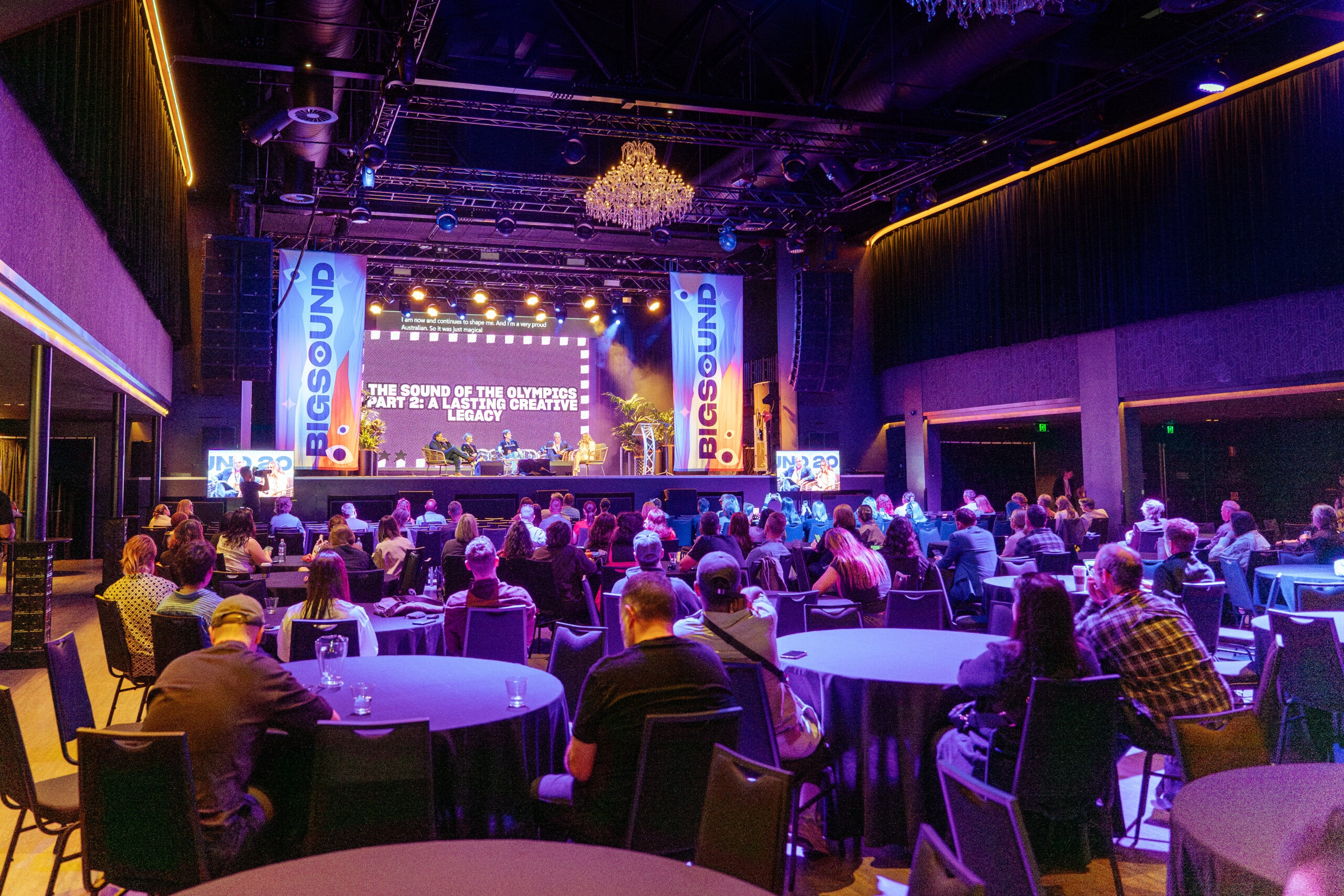
And, 26 years later, Nikki is still performing the song to rooms full of people who know every word – including a packed Beaumont crowd belting it back at her on a Tuesday afternoon at BIGSOUND.
Most conversations about Olympic legacy happen at a much larger scale than that. We talk about infrastructure, transport, tourism, trade and global reputation.
Nikki’s story points somewhere else entirely.
Sydney 2000 changed the life of a 13-year-old Australian performer.
Who gets that opportunity in Brisbane?
I’ve spent most of my career in and around Queensland’s creative industries and one of the great privileges of that has been watching careers happen.
Sometimes there’s a steady climb. Sometimes there’s a lucky break. Sometimes somebody gets put in the right room, in front of the right person, on exactly the right night. And sometimes a platform changes everything.
Brisbane 2032 is going to be one hell of a platform.
The obvious creative moments are the Opening and Closing Ceremonies. They’ll be enormous, watched around the world and filled with music, performance, design, choreography, storytelling and spectacle.
But that’s just the pointy end. Think about everything surrounding an Olympic and Paralympic Games: live sites, cultural programming, public art, music, hospitality, ceremonies, brand activations, events, content, design, broadcast, visitor experiences, precincts, tourism campaigns, corporate events and international delegations.
That’s an extraordinary volume of work for creative people – and hopefully not just the names we already know.
Nikki talked about the artists, composers and directors she encountered through Sydney 2000; people whose careers grew from the experience and relationships that continued long after the flame went out. Her own story is perhaps the most wonderfully obvious example. She auditioned for six months to land the role. She was 13. Nobody could possibly have known we’d still be talking about it more than a quarter of a century later.
There was another perspective at BIGSOUND that I loved.
Zipporah Corser, daughter of Christine Anu, was asked whether she might perform My Island Home with her mum in 2032. It would certainly make for a moment. Christine’s performance of the song at the Sydney 2000 Closing Ceremony remains one of the enduring images of those Games.
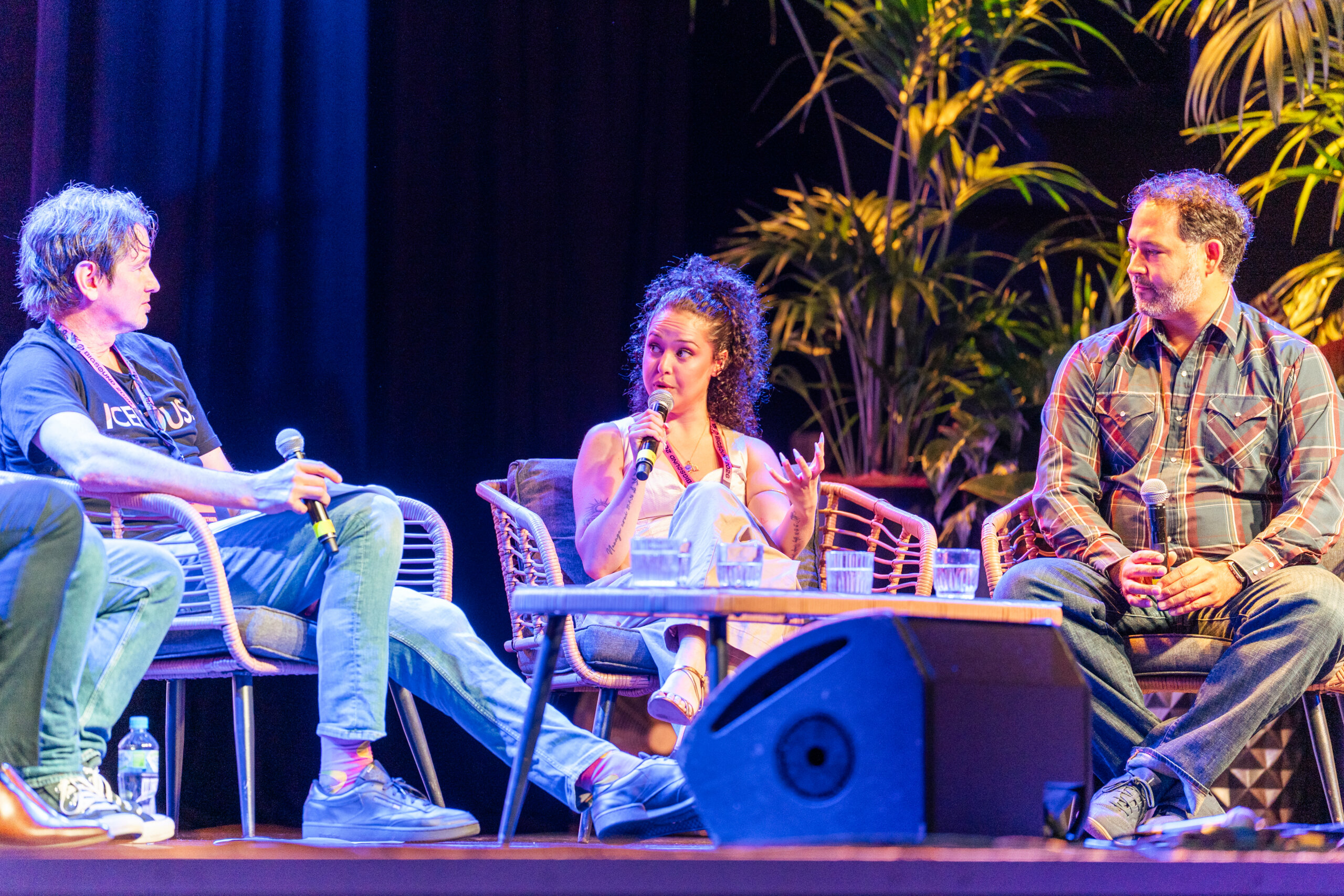
But Zipporah wasn’t interested in recreating it.
“I think everyone deserves a new Island Home,” she said.
Her mum had her moment. Songwriter Neil Murray had his. Zipporah wants her own legacy – and wants another Australian songwriter to have the chance to create the song that might define Brisbane’s Games.
There’s something pretty wonderful in that. Sydney had My Island Home. It had Nikki Webster. Those moments belong to those Games and that time.
By 2032, I’d love us to have created a whole new set of them.
Maybe the song hasn’t been written yet.
By 2032, there will inevitably be conversations about which famous Queenslanders should perform. Powderfinger got the inevitable mention during the BIGSOUND panel.
But I hope our ambition extends beyond assembling the greatest hits of Queensland creativity. I hope we leave some room for discovery.
Queensland is already doing exactly that in sport.
In 2022, the Queensland Government launched YouFor2032, a statewide talent search designed to find young Queenslanders with the potential to become our next generation of Olympic and Paralympic athletes.
I love the premise. Don’t just wait for exceptional talent to emerge. Go looking for it.
Why couldn’t we do the same for Queensland’s creative talent?
Over the next six years, imagine actively searching for the singers, songwriters, musicians, dancers, designers and other young creatives who might have something extraordinary in them.
Find them across Queensland. Pair them with established artists and mentors. Give them commissions. Put them in rooms they wouldn’t otherwise have access to. Let them cut their teeth on increasingly ambitious projects.
Some might end up working on the Games. Plenty won’t. But we’d have spent six years finding and developing a generation of Queensland creative talent along the way.
That’s the kind of legacy I can get excited about.
I want emerging artists working alongside people they’ve admired for years. Queensland musicians playing to audiences a hundred times bigger than anything they’ve experienced before. A young designer being handed something terrifyingly ambitious.
I want regional artists on an international stage without having to move to Sydney or Melbourne first. First Nations artists not simply included in the story, but among the people shaping how Queensland tells it.
And somewhere in the middle of all that, I hope somebody’s parents are sitting in an audience thinking: How the hell did our kid end up here?
That’s the stuff I’d love to see.
Of course, we remember Nikki flying through the air. We don’t remember the names of every composer, costume designer, choreographer, musician, technician, producer, director and writer who helped put her there.
That came up in the earlier BIGSOUND panel too.
Composer Lucas Cantor Santiago has worked on almost every Olympics since Sydney from the US broadcast side and offered some very practical advice to Australian musicians: make sure people know the work is yours.
He’d seen music make its way into Olympic broadcasts without international networks knowing who wrote it or how to properly credit it. That can mean missed recognition – and missed royalties.
I’d love to think we’re better at that by 2032.
Because when billions of eyes turn towards this part of the world, Queensland creatives will get to work at a scale rarely available here.
A designer who delivers something for an Olympic Games takes that experience into their next job. A producer who learns to deliver at an international scale doesn’t unlearn it afterwards. A musician who collaborates with an artist from the other side of the world keeps that relationship. A small creative business that wins a major contract suddenly has a case study it can take anywhere.
People get better by doing big things.
For all the talk of what 2032 might leave behind, I’d put that pretty high on the list: a generation of Queensland creatives who got the chance to do the biggest work of their careers, right here – with the credits, relationships and experience to show for it.
Towards the end of the BIGSOUND conversation, Nikki was asked what artists could learn from her Sydney experience.
Her advice was simple: take the opportunities. Be ready. Say yes. Give something a go even when you’re not entirely sure what you’re doing.
Pretty good advice for a city, really.
There will be legitimate debates over the next six years about Brisbane 2032. There should be. A project of this scale deserves scrutiny, ambition and plenty of competing ideas about what success looks like.
But amid all of that, there’s an extraordinary creative opportunity sitting in plain sight.
There’s a generation of Queensland artists and creatives who are going to find themselves living in an Olympic city. Some are already established. Some are playing tiny rooms at BIGSOUND this week. Some are studying. Some are still at school.
And some haven’t discovered the thing they’re brilliant at yet.
Nikki Webster was 13 in 2000. Twenty-six years later, she’s still talking about the night that changed her life.
Somewhere in Queensland right now, there’s another kid who has absolutely no idea what’s coming.
I hope we give them their shot.
Images by Alicia Flood for BIGSOUND 2026